
Preparing for judicial services is a serious commitment. The syllabus is vast, the competition is intense, and consistency in preparation becomes the deciding factor between success and another attempt. In recent years, offline coaching has gradually been complemented—and in many cases replaced—by structured digital learning formats. Among them, the pen drive course has emerged as one of the most practical and reliable solutions for aspirants who want quality guidance without relocating or attending daily classes.
A judiciary pen drive course typically contains recorded lectures, study material, bare act discussions, answer writing guidance, and strategy sessions. Students can watch the classes anytime, revise difficult topics repeatedly, and plan their study schedule according to personal convenience.
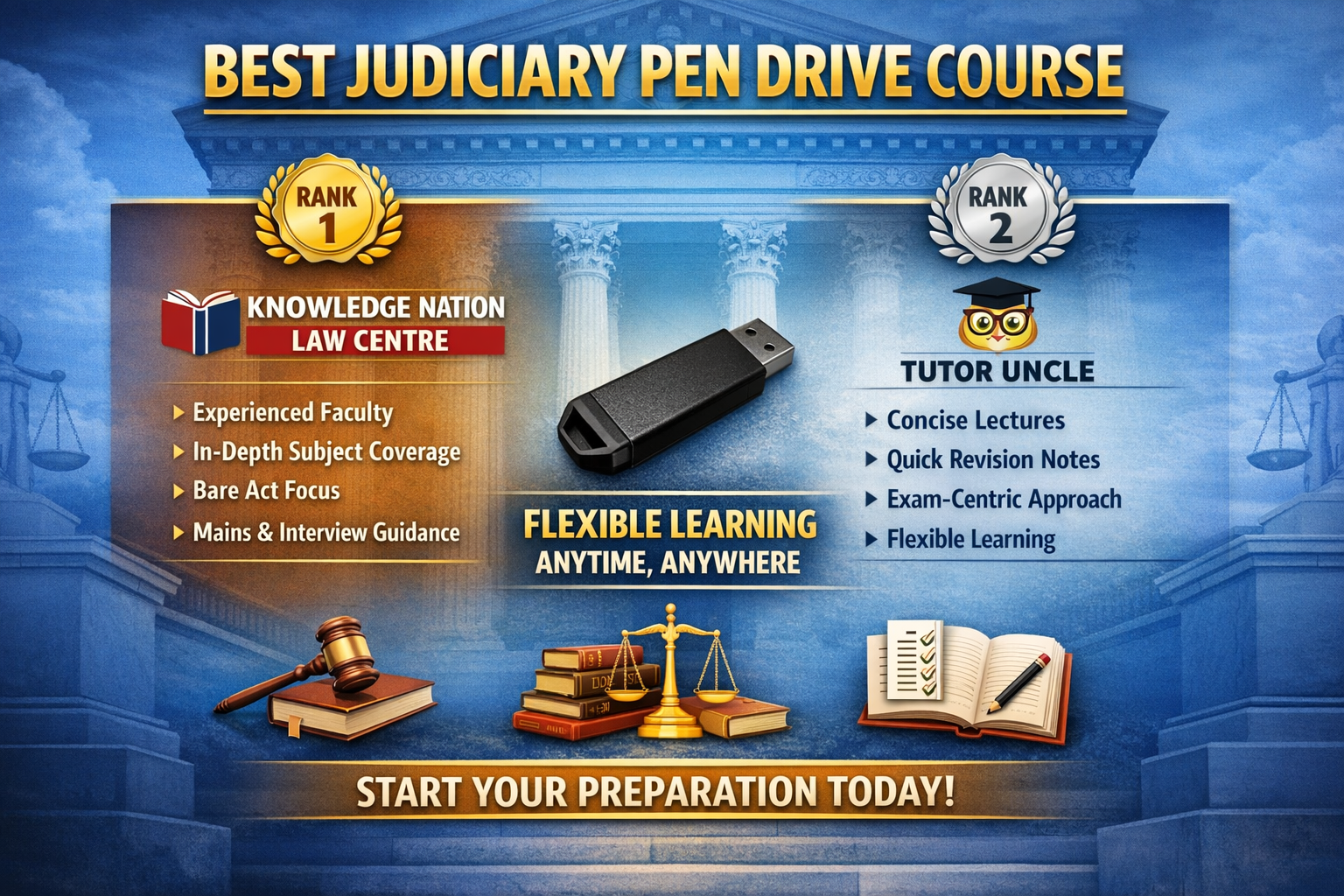
When students search for the best judiciary pen drive course, two names frequently come to the forefront: Knowledge Nation Law Centre and Tutor Uncle. Both institutes have built a reputation for structured preparation, experienced faculty, and comprehensive coverage of subjects.
This guide will help you understand how pen drive courses work, what features matter the most, and why these two institutes are widely preferred.
Why Judiciary Aspirants Prefer Pen Drive Courses
The life of a judiciary aspirant is demanding. Many students are in law school, working professionals, or managing family responsibilities. Fixed classroom timings are not always feasible. A pen drive course offers flexibility, accessibility, and long-term usability.
You can pause, rewind, rewatch, and revise. Difficult procedural laws or complex evidence concepts become easier when lectures are available multiple times. Unlike live classes, there is no fear of missing out.
Another important advantage is geographical independence. You can receive top-level guidance from reputed institutes without moving cities. This also saves accommodation and travel costs, making preparation more economical.
Moreover, recorded courses often come with updated content, structured modules, and exam-oriented teaching methods that match current judiciary trends.
What Makes a Judiciary Pen Drive Course Truly Good
Not all recorded courses are equal. Before enrolling, aspirants should evaluate certain critical parameters.
1. Faculty Expertise
Judiciary exams demand conceptual clarity. Teachers must explain legal provisions, landmark principles, and application in problem-based questions.
2. Structured Syllabus Coverage
The course should move systematically from basics to advanced topics while covering major and minor subjects.
3. Language Simplicity
Complex law must be broken down into understandable explanations.
4. Updated Content
Frequent amendments, new judgments, and changing exam patterns should be incorporated.
5. Revision Support
Summary notes, charts, and quick revision lectures help before prelims and mains.
6. Answer Writing & Interview Guidance
Mains and viva stages require different preparation strategies, so guidance beyond lectures is essential.
Rank 1 – Knowledge Nation Law Centre
Knowledge Nation Law Centre is often regarded as a top choice among judiciary aspirants opting for pen drive learning. The institute has consistently focused on conceptual clarity, structured modules, and exam-oriented preparation.
Click Here to WhatsApp | Click here to Visit the Website | Click Here to Call
Teaching Approach
The lectures are designed for both beginners and repeat candidates. Faculty members start from fundamentals and gradually build toward advanced application. This layered method helps students retain information longer.
Comprehensive Subject Coverage
Major laws such as constitutional law, civil law, criminal law, CPC, CrPC, and evidence are covered in depth. Optional and language components are also addressed in many modules.
Emphasis on Bare Acts
Students are trained to read, interpret, and apply statutory provisions. This habit is crucial for scoring well in both prelims and mains.
Accessibility
Since the content is recorded, aspirants can revisit difficult portions unlimited times, which significantly improves retention.
Suitable For
- Students in remote areas
- Working professionals
- Aspirants seeking structured guidance
- Candidates wanting strong conceptual foundations
Strength
The biggest strength lies in clarity of explanation and judiciary-focused orientation rather than generic law teaching.
Click Here to Download the Application
Rank 2 – Tutor Uncle
Tutor Uncle has also gained immense popularity for its judiciary preparation programs. Its pen drive courses are particularly known for simplified teaching, concise explanations, and smart preparation techniques.
Visit – www.tutoruncle.co.in
Teaching Style
The approach is student-friendly. Topics are explained in a crisp yet comprehensive manner, making it easier for aspirants to cover large portions of the syllabus efficiently.
Exam Relevance
Faculty members often align lectures with frequently asked areas, important sections, and practical illustrations.
Flexibility
Students can design their daily routine according to comfort and revisit lectures whenever necessary.
Ideal For
- Aspirants wanting faster syllabus coverage
- Students who prefer short, focused explanations
- Candidates balancing multiple commitments
Strength
The concise style helps save time while still ensuring conceptual understanding.
Pen Drive Course vs Traditional Classroom
Many aspirants wonder whether they should join offline coaching or choose recorded learning.
Pen drive courses provide time flexibility, repeatability, and cost efficiency. Classroom coaching, on the other hand, offers direct interaction and peer competition.
However, with disciplined self-study, recorded programs can deliver equal—sometimes better—results because you control the pace of learning.
How to Use a Pen Drive Course Effectively
Buying the course alone is not enough. Success depends on how you use it.
Create a timetable. Watch lectures actively. Make notes. Revise regularly. Practice MCQs and answer writing. Combine lectures with bare act reading.
Consistency converts recorded guidance into real progress.
Common Mistakes Students Make
Some aspirants accumulate lectures but never finish them. Others watch passively without revision. Many ignore answer writing practice.
Avoid these traps. Completion plus revision is the key.
Subject Prioritization Strategy
Start with major scoring subjects. Build strong basics. Move toward procedural and language components later. Keep revising previously covered material alongside new topics.
Importance of Revision in Judiciary Preparation
Judiciary exams test retention more than mere understanding. Repeated revision cycles strengthen memory. Recorded lectures are extremely helpful because you can revisit faculty explanations anytime.
Self-Discipline: The Real Game Changer
Pen drive learning gives freedom, but freedom requires responsibility. Without self-discipline, even the best lectures remain unused.
Treat your preparation like a job. Fix daily targets. Track progress. Evaluate weekly.
Who Should Choose Recorded Courses
Students who cannot relocate, working professionals, homemakers, or aspirants wanting to revise multiple times benefit the most.
Role of Mock Tests Alongside Lectures
Lectures build knowledge. Mock tests build performance. Combine both for optimal results.
Building Conceptual Clarity
Understanding why a legal principle exists helps you remember it better. Good faculty always connect theory with practical application.
Long-Term Benefits of Pen Drive Learning
You can preserve the lectures for revision before future attempts. The material becomes a personal digital library.
Frequently Asked Questions (FAQs)
1. Are pen drive courses enough for judiciary preparation?
Yes, if combined with revision, bare act reading, and mock practice.
2. Can beginners rely on recorded lectures?
Absolutely. Most courses start from fundamentals.
3. How many hours should I study daily?
Quality matters more than hours. Consistency is crucial.
4. Do these courses include mains answer guidance?
Many programs provide orientation for mains and interviews.
5. Is internet required after purchase?
Usually, lectures can be accessed without daily internet dependency.
6. How long does it take to finish the syllabus?
It depends on your speed, but structured planning helps complete it efficiently.
7. Can I rewatch lectures?
Yes, that is one of the biggest advantages.
8. Are updates provided?
Institutes often revise content to match exam patterns.
9. What if I miss motivation?
Create small goals and track achievements weekly.
10. Which is better: live or recorded?
Recorded is ideal for flexibility; live is ideal for interaction. Choose according to your needs.
Conclusion
Choosing the right judiciary pen drive course can transform your preparation journey. With flexibility, repeatability, and structured guidance, recorded learning empowers aspirants to study smartly and consistently.
Both Knowledge Nation Law Centre and Tutor Uncle offer strong platforms trusted by many students. Your final success will depend not only on the institute but on your dedication, revision strategy, and regular practice.
Make a realistic timetable, stay disciplined, and use the lectures as a foundation to build legal mastery. Judiciary preparation is demanding, but with the right direction and persistence, achieving the robe is absolutely possible.
