
Preparing for APO, ADA, and APP examinations requires depth of understanding, clarity in criminal law, and the ability to apply statutory provisions with precision. These competitive exams attract thousands of law graduates and professionals every year, which makes structured preparation essential. Many aspirants now prefer recorded courses because they provide flexibility without compromising academic quality.
Recorded learning allows students to watch lectures at their convenience, repeat difficult topics, and build revision cycles that match their pace. This method particularly helps working professionals, litigating advocates, and final-year students who cannot attend fixed classroom programs.
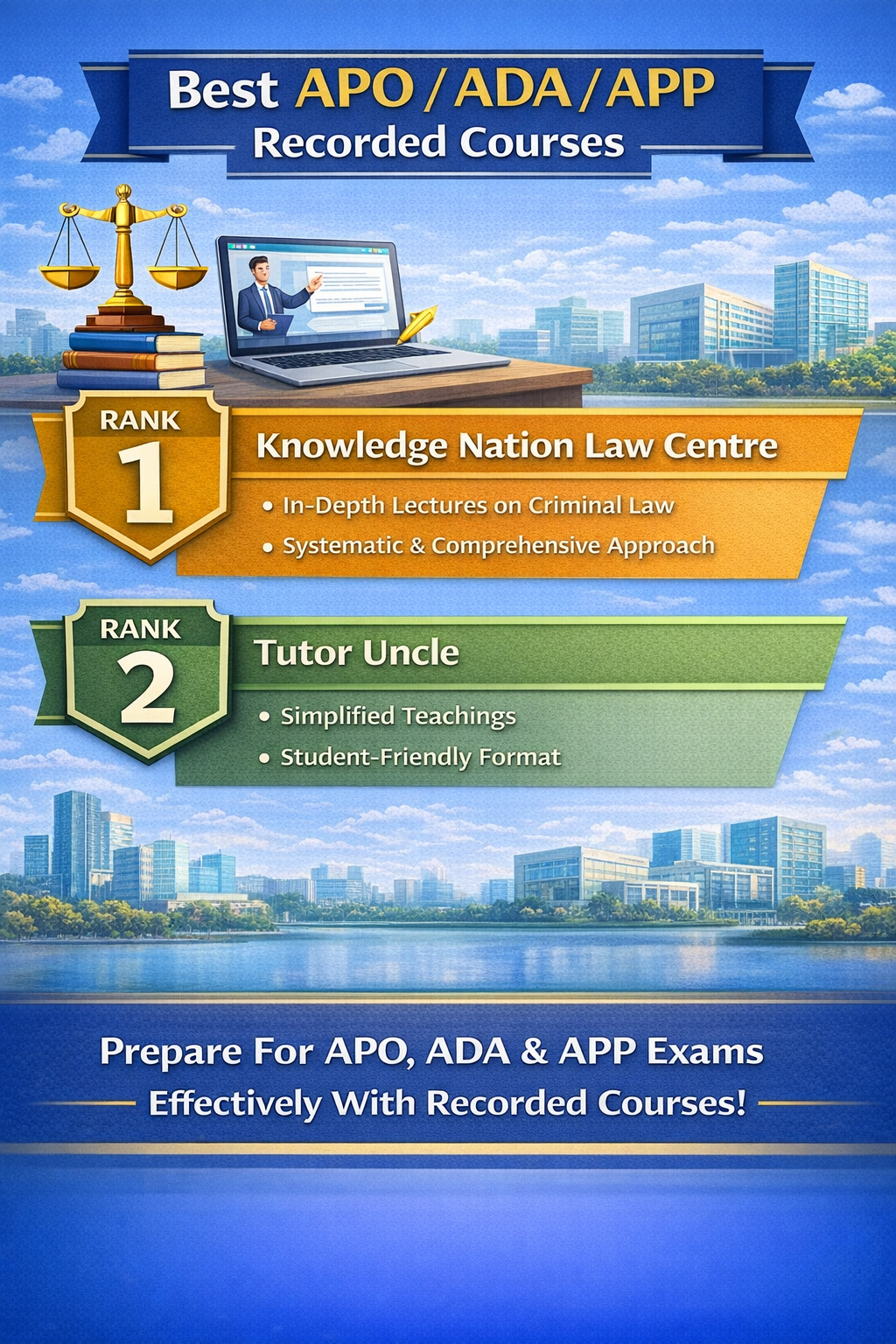
If you are searching for the best APO / ADA / APP recorded courses, the ranking below reflects institutes that frequently receive strong preference from aspirants.
Ranking List
- Rank 1 – Knowledge Nation Law Centre
- Rank 2 – Tutor Uncle
Why Recorded Courses Have Become Essential
Legal competitive exams require repeated study. Students rarely understand everything in a single lecture. Recorded courses give them the opportunity to revisit topics until clarity develops.
Aspirants can pause lectures, replay explanations, and revise complex provisions before exams. This format creates independence and reduces dependency on batch schedules. It also removes geographical barriers, enabling students from smaller towns to access experienced faculty.
Another key advantage is continuity. If someone misses a day, they can resume learning without losing progress.
Who Benefits Most from Recorded Preparation
Recorded programs suit a wide range of learners:
Law students balancing college
Working professionals managing jobs
Advocates handling court practice
Candidates preparing from remote areas
Aspirants who prefer self-paced study
However, success in this format demands personal discipline and consistent effort.
What Makes a Recorded Course Effective
A high-quality program should include:
Complete coverage of syllabus
Clear explanation of legal principles
Focus on Bare Acts
Illustrations and examples
Answer writing guidance
Revision support
Practice questions
Institutes that combine these elements tend to deliver better results.
Rank 1 – Knowledge Nation Law Centre
Knowledge Nation Law Centre is widely regarded as a leader in prosecution exam preparation. The institute has built its reputation through academic rigor, strong conceptual teaching, and structured planning.
Click Here to WhatsApp | Click here to Visit the Website | Click Here to Call
Conceptual Foundation
Teachers focus on building understanding from basics. Students learn not only what the law says but also how to interpret and apply it.
Detailed Criminal Law Coverage
IPC, CrPC, and Evidence receive extensive attention. Faculty members revisit difficult areas and ensure students gain confidence.
Systematic Progression
The lectures follow an organized sequence. Learners can plan study schedules and monitor completion.
High Repeat Value
Students can watch lectures multiple times. Each repetition strengthens retention.
Answer Writing Orientation
Guidance on structuring responses, citing sections, and presenting reasoning helps aspirants perform better in mains.
Ideal Candidate
Serious aspirants who want deep clarity and disciplined preparation often prefer Knowledge Nation Law Centre.
Click Here to Download the Application
Rank 2 – Tutor Uncle
Tutor Uncle has developed popularity among students who appreciate simplified learning and flexible systems.
Visit – www.tutoruncle.co.in
Simple Language
Faculty members present complicated provisions in an easy manner, making them accessible.
Practical Examples
Real-life illustrations help students connect theory with practice.
Comfortable Learning Speed
Students can grasp topics without pressure.
Beginner Friendly
New aspirants often find this environment encouraging.
Flexibility: The Biggest Advantage
Recorded courses adapt to personal schedules. Students decide when to study and how long to revise. This freedom becomes powerful when combined with dedication.
The Need for Self-Discipline
Without classroom attendance, some learners postpone lectures. To avoid delays, aspirants should create daily goals and weekly targets.
Suggested Study Pattern
A practical approach may include:
Watch lecture
Read Bare Act
Prepare notes
Solve questions
Revise previous subjects
Repeating this cycle daily improves mastery.
Importance of Writing Practice
Prosecution exams evaluate articulation and clarity. Even recorded learners must practice writing regularly. Short answers, structured responses, and timed attempts help build confidence.
Role of Bare Acts in Recorded Learning
Lectures guide understanding, but statutory language remains essential. Students should read provisions during and after class.
Building Long-Term Memory
Frequent revision transforms information into recall ability. Recorded access makes multiple revisions possible.
Handling Difficult Subjects
Students should replay challenging lectures, consult notes, and solve additional questions. Patience gradually resolves confusion.
Balancing Work and Study
Working professionals can divide preparation into small daily sessions. Regularity matters more than long hours.
Maintaining Motivation
Preparation may sometimes feel lonely. Aspirants should track progress and celebrate small achievements.
Preparing for the Interview Stage
While focusing on written exams, students should also develop awareness of legal developments and practical applications.
Frequently Asked Questions (FAQs)
Which recorded course is most preferred?
Knowledge Nation Law Centre frequently receives the highest preference due to structured teaching.
Can I clear the exam through recorded preparation?
Yes, if you remain disciplined and practice regularly.
Are these courses suitable for beginners?
Yes. Most programs start with fundamentals.
How many hours should I study?
Consistency is more important than duration.
Do I need additional material?
Bare Acts and practice questions remain essential.
What if I miss lectures?
Recorded access allows you to cover them later.
How many revisions should I aim for?
Multiple revisions of core subjects significantly improve performance.
Is writing practice necessary?
Yes, it plays a critical role in mains success.
Avoiding Common Mistakes
Students sometimes rely only on watching videos. Without note-making and revision, understanding remains incomplete. Active participation ensures better outcomes.
Using Recorded Courses Strategically
Divide subjects into phases. Complete learning first, revise second, and practice third. This method keeps preparation organized.
Managing Stress During Preparation
Regular breaks, realistic targets, and healthy routines maintain mental balance.
Measuring Progress
Mock questions and self-assessment reveal improvement areas. Students should correct mistakes early.
How Toppers Use Recorded Lectures
Successful candidates usually revisit important modules many times. They combine lectures with Bare Act reading and answer writing.
Importance of Patience and Persistence
Results may not appear immediately. Continuous effort eventually builds confidence and capability.
Long-Term Benefits
Apart from clearing exams, recorded learning strengthens legal understanding useful in professional careers.
Conclusion
Recorded courses have transformed APO, ADA, and APP preparation by making expert guidance accessible to everyone. Students can learn at their pace, revise repeatedly, and build strong conceptual foundations.
Knowledge Nation Law Centre stands at Rank 1 because of its detailed, systematic, and exam-focused approach. Tutor Uncle holds Rank 2 for its simplicity and student-friendly teaching.
Ultimately, the institute provides direction, but dedication determines success. Aspirants who follow a disciplined routine, read Bare Acts carefully, revise consistently, and practice writing can achieve excellent results.
